
Who needs a professional coach?
Certainly not you. Right? Wrong.
It's time to have an honest discussion about the importance of professional coaching for leaders who are stepping forward to heal our damaged world. Feeding the needy, campaigning for others, providing a bed and a hot meal to the homeless, discovering disease solutions, assisting a suicide hotline team, or battling to maintain our rights in today's climate are some of the most difficult tasks.
New leaders in organisations facing these difficulties must understand the intricacies of leading an organisation effectively. These leaders need support. Their clients deserve it, and organisations must provide it to maximise their impact.

Let’s tackle some common coaching myths.

Rock-star leaders don’t need coaches
Think about Roger Federer. He’s considered one of the best tennis players in the world. Even at 37, he continued to win big tournaments, and anyone who knows tennis sees him as the gold standard. Classy and gracious, gritty and determined. And dashing to boot.
Why in the world does someone like Roger Federer have a coach?
What doesn’t he know? What hasn’t he learned?
Federer would never have dreamed of walking onto centre court without his coach sitting in the family box. From that vantage point, his coach can be a strategist, an advocate, or a motivating kick in the pants, whatever Federer needs in order to be the best.

Long-tenured CEOs have seen it all and don’t need a coach.
Atul Gawande, an accomplished surgeon who felt he was losing his edge, wrote a terrific article in The New Yorker titled “Personal Best" He felt he was still a very good surgeon, because people put their lives in his hands every day, he knew they deserved a great surgeon. He hired a coach to watch him in the operating room. The coach could see what Gawande couldn’t and recommended minor adjustments—like where he placed his arms—that mattered. A lot.
Gawande saw improvements. He was able to bring his A-game back to the operating room, and this renewed his passion for his work.
A coach can reinvigorate leaders, help sharpen their skills, or help reinvent their jobs. When I ask CEOs with long tenures about the key to their longevity, they all say the same thing: "My job has continued to change and evolve." "I keep learning." "I started out strong, but I’m so much better today."
Departing leaders do not need coaches.
When founders, or "long and strong," decide to step down, it should not be a solo sport. However, board members are not the best partners in this exercise because they may be driven by self-preservation and feel intense stress.
A strategic plan is necessary when planning for a successor. In my work with leaders undergoing this transition, I encourage them to consider their exit strategy: Do they want their successor to take on the burden of cleaning up the "dust bunnies" before they depart?
We talk about how to make hard decisions in the twilight of one's career at an organisation, so the new executive director can start from a place of strength. A retiring leader who lacked the energy to address problems should not leave a mess for a new CEO to inherit.
Veteran leaders may have built the organisation or know all there is to know about it, but they need help handing it over responsibly because they can't always be objective on their own.
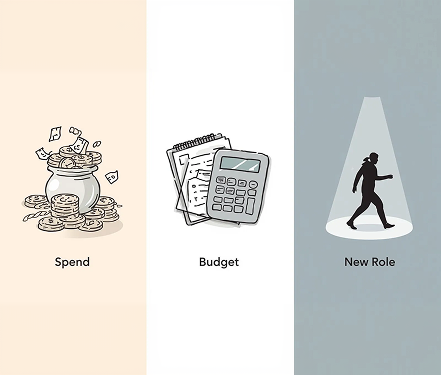
We spent all that money on a search firm.
We shouldn't spend more money hiring a coach for our new executive director. Consider this scenario. The search committee selects Cindy as the new leader. Everyone is over the moon about her skills and experience; the search firm did a great job. Contract negotiations begin, and the board is more than a little surprised that the "rock star" wants coaching as part of her compensation. The search committee calls the search firm and says something like, "We are so confused. You said Cindy was a rock star, but now she is asking for a coach. Is there something you didn’t tell us?"
Well, yes. Cindy is savvy; she knows how high the expectations are. She anticipates that change-management support is critical after a leader’s departure. Board members often think a request for a coach signals a deficiency. They’re wrong. It’s just plain clever.

A good coach alone can save a weak or faltering CEO.
A "coachable" leader is self-aware and able to recognize strengths as well as areas for improvement. However, the person seeking coaching must make the decision to hire a coach. The fit has to be right, so the client can absorb and embrace the guidance.
Too many organizations hire a coach when a leader gets into trouble. Often, boards aren't really looking to provide support; they're looking for cover or someone to tell them whether their CEO can cut it.
Here's some truth-telling: Coaching alone can't save a leader. CEOs (and trustees) have to want it to work and believe that the leader can make it happen. Coaching often bleeds into change management and crisis coaching, so a particular kind of coach might save an organization. But if you really are concerned about a leader's approach, it may be time for a performance improvement plan instead of a coach.

If you can’t afford a coach, you’re on your own.
If your organisation simply can't stretch its budget for a coach, the CEO and trustees should explore other options together. Encourage staff leaders to seek out lower-cost opportunities. There are countless resources to help executive directors find a sense of community and a network of support.
The surgeon, Atul Gawande, has a popular Ted Talk. "Wanna Be Great at Something?" is the title of the talk. "Get a coach!" In it, he says something that should stick with every board member who hires an executive director and every organisation striving for greater impact: Roger Federer remains unfinished until his retirement. Every day he can make an adjustment, shift his mindset, and continue to improve, even though he is one of the best sports figures of our time.

If this stayed with you longer than expected, it may be worth a conversation.
Explore with a call to me.
Call Now